A flat stomach is rarely just about effort. Many women eat well, stay active, and still feel frustrated by a lower-abdominal area that does not respond the way the rest of the body does. That is exactly why fat cavitation for stomach concerns has become such a popular non-invasive body sculpting treatment. It offers a more targeted approach for clients who want smoother contour and better definition without surgery or extended downtime.
The stomach tends to hold on to stubborn fat for a range of reasons, including hormones, genetics, pregnancy, age, and simple body composition. Even when your weight is stable, the midsection can look softer or fuller than you would like. For many clients, that is less about chasing a dramatic transformation and more about wanting their clothes to sit better and their shape to feel more balanced.
This is where body contouring treatments can be useful. Rather than replacing healthy habits, they support them by focusing on specific areas that are resistant to diet and exercise alone. The stomach is one of the most requested zones because small changes in this area can make a noticeable difference to overall silhouette.
Fat cavitation is a non-invasive treatment designed to target localized fat beneath the skin. It uses low-frequency ultrasound technology to disrupt fat cells in a selected area. Those cells are then processed naturally by the body over time.
When used on the stomach, the goal is not weight loss. It is contouring. That distinction matters. Clients usually choose this treatment because they are close to their ideal weight but want to refine a soft or stubborn area around the abdomen.
The treatment is typically comfortable and does not involve needles, incisions, or anesthesia. Most clients describe it as a warm, manageable treatment with little interruption to daily life, which makes it appealing for women who want effective body sculpting without the recovery associated with more invasive procedures.
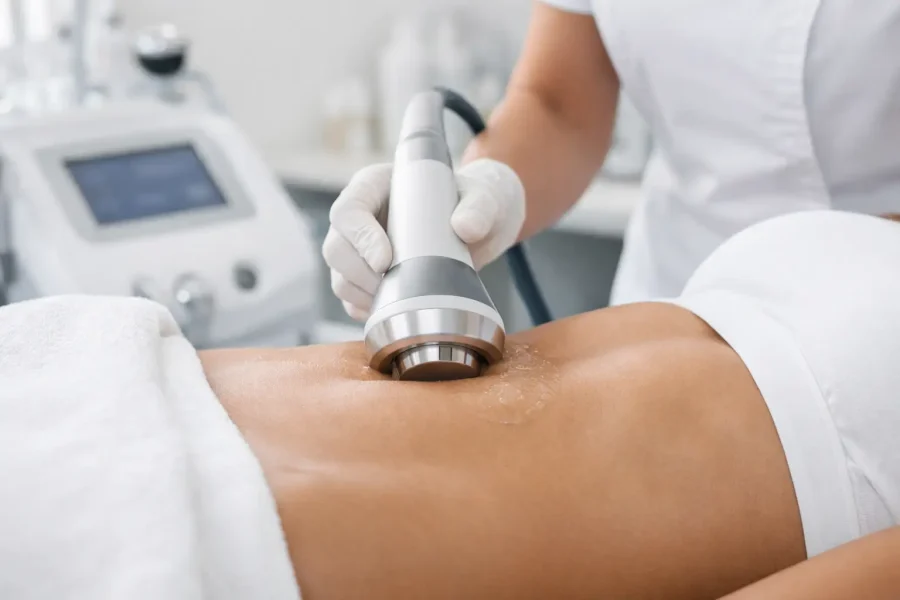
During a session, a handheld device is moved over the treatment area using ultrasound energy. This energy is directed into the fat layer under the skin. The purpose is to break down the membrane of the targeted fat cells without harming the surrounding tissue.
Once disrupted, the contents of those fat cells are gradually eliminated through the body’s natural metabolic and lymphatic processes. That is why results are not instant in the way they might be with surgery. The change happens progressively, often over a series of sessions.
In many treatment plans, fat cavitation may be combined with radio frequency skin tightening. This can be especially helpful on the stomach, where clients may be concerned not only with fullness but also with skin texture or mild looseness. Pairing contouring with skin support often creates a more refined final result.
Fat cavitation for stomach contouring suits clients who have a localized area of abdominal fullness and want a non-surgical option. The best candidates are generally already maintaining a stable lifestyle and are looking for improvement rather than perfection.
It can be a strong option for women after pregnancy, for clients noticing age-related changes through the midsection, or for anyone who feels that their stomach does not reflect the effort they are already putting into their health and appearance. That said, it is not ideal for significant weight reduction, and it is not a substitute for medical treatment or structured weight management.
A proper consultation matters because candidacy depends on more than just the area you want to treat. Skin quality, body composition, goals, and medical history all influence whether this treatment is appropriate. A personalized plan is what turns a generic body treatment into a safe, results-focused service.
A professional appointment should begin with assessment and treatment planning. The stomach area is reviewed carefully, measurements or photos may be taken, and realistic expectations are discussed. This step is important because the most successful treatments start with clarity about what can be achieved and how many sessions are likely to be needed.
The treatment itself is straightforward. A conductive gel is applied to the skin, and the device is passed over the abdomen in a controlled pattern. Sessions are usually relatively quick, making them easy to fit into a busy schedule.
Afterward, most clients return to normal activity straight away. There is no surgical recovery period, although you may be advised to increase water intake, stay active, and support lymphatic drainage to help the body process the disrupted fat cells efficiently.
The right expectation is refinement, not reinvention. Fat cavitation can help reduce a stubborn layer of abdominal fat and create a smoother, more sculpted look, but results vary based on the starting point and how your body responds.
Some clients notice early changes after a few sessions, while others see more visible improvement as the treatment course progresses. The stomach can respond well, but consistency is usually key. A single session may not be enough for meaningful contour change, especially if the area is larger or denser.
Lifestyle still plays a role. Treatments tend to hold best when supported by hydration, movement, and weight stability. If a client gains weight after treatment, the overall shape of the area can change again. That is not a flaw in the treatment. It is simply how the body works.
The postpartum body deserves a realistic and respectful conversation. Many women find that the stomach is the area that changes the most after pregnancy, even long after healing. There may be residual fullness, changes in skin firmness, or a different shape through the lower abdomen.
For the right client, fat cavitation can be part of a gentle body contouring plan once recovery is complete and medical clearance has been given where needed. It is particularly appealing to women who are not interested in surgery and want a professional approach that supports confidence in a measured, natural-looking way.
It is important, though, to understand the limits. If the main concern is muscle separation or significant laxity rather than localized fat, another treatment approach may be more suitable. This is why a specialist consultation is so valuable. Good aesthetic care is never one-size-fits-all.
The appeal of this treatment is easy to understand. It is non-invasive, requires little to no downtime, and can be tailored to a specific abdominal area. For women who want body refinement without stepping into surgical territory, that is a strong advantage.
The trade-off is patience. Results are gradual, and most clients need a course of sessions rather than a one-time appointment. It also works best for targeted contouring, not large-volume fat removal. If someone is expecting a dramatic weight-loss outcome, they are likely to be disappointed.
The other important factor is provider skill. Technique, treatment planning, and honest guidance matter. A thoughtful provider will assess whether the stomach is best treated with cavitation alone or whether combining it with radio frequency or another supportive service will produce a more balanced result.
Body sculpting is personal. The best experience comes from working with a specialist who understands both the technical side of the treatment and the visual outcome you are hoping to achieve. Safety, precision, and personalized care should always come first.
In a studio environment such as Tanya Peters Aesthetics, clients benefit from a more tailored approach rather than a rushed, high-volume treatment model. That means better assessment, clearer expectations, and a plan built around your body rather than a standard package.
If you are considering treatment, ask the right questions. How many sessions are recommended? Is your stomach concern mainly fat, skin laxity, or both? What should you do between appointments to support results? These details shape the quality of the outcome.
A well-contoured stomach does not have to mean aggressive change. For many women, it is simply about feeling more comfortable in fitted clothing, more polished in their silhouette, and more confident in a body that already does a lot. The right treatment should support that goal with subtlety, professionalism, and results that look like you on your best day.