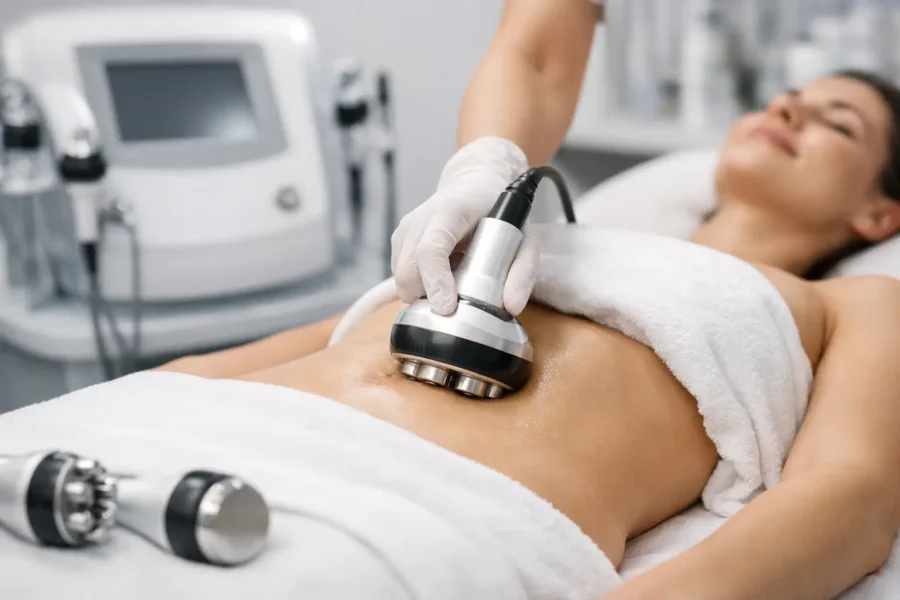
If you are asking how many fat cavitation sessions needed, the honest answer is rarely one fixed number. Most clients want to know when they will start seeing a smoother waistline, a more defined stomach, or less fullness through areas that have not responded to diet and exercise. The real answer depends on the treatment area, the amount of stubborn fat present, your lifestyle, and how your body responds between appointments.
Fat cavitation is best thought of as a course of treatment rather than a one-time fix. It is designed to support body contouring in specific areas, not dramatic weight loss across the whole body. That distinction matters, because the best results come from realistic expectations and a treatment plan tailored to your shape, goals, and skin condition.
For most clients, a typical starting plan is between 6 and 12 sessions. That range is common because non-invasive body sculpting works gradually. The body needs time to process the disrupted fat cells, and visible contour changes tend to build over several appointments rather than appear all at once.
If the area is small and the concern is mild, some clients notice a change after 4 to 6 sessions. If the area is larger, denser, or more resistant, 8 to 12 sessions is often more realistic. This is especially true for common concern areas such as the abdomen, flanks, thighs, or lower stomach.
The spacing of sessions also matters. Many providers recommend weekly appointments, although this can vary depending on the treatment protocol and whether fat cavitation is being combined with radio frequency skin tightening or cellulite-focused treatments. A rushed schedule is not always better. The body still needs time to respond.
The biggest factor is the size and nature of the treatment area. A small pocket of fat around the lower abdomen is different from more generalized fullness through the thighs or love handles. The more volume there is to treat, the more sessions are usually required.
Your starting point also plays a role. Fat cavitation tends to be most effective for localized, stubborn areas in clients who are already fairly close to their desired shape. It is not a replacement for major weight loss. If someone is hoping to reduce several clothing sizes, this treatment may not match their expectations on its own.
Skin quality is another important piece. If the skin has some laxity, combining cavitation with radio frequency may produce a more refined result than cavitation alone. Reducing volume without supporting the skin can sometimes leave the area looking less firm than expected. A customized treatment plan considers both contour and skin finish.
Hydration, movement, and consistency can also influence the outcome. Clients who stay well hydrated, follow aftercare carefully, and keep appointments as recommended often see better progression than those who treat the sessions as occasional maintenance.
Not all areas respond at the same pace. The stomach may behave differently from the inner thighs, and the upper arms may need a different strategy again. Some zones hold fluid more easily, some have firmer fat, and some reveal changes faster simply because the area is smaller.
This is one reason a personalized consultation matters. A professional assessment can help determine whether the area is suitable for treatment and whether your goal is realistic within a certain number of sessions.
Fat cavitation can support your body goals, but it does not override your daily habits. If your nutrition is inconsistent, hydration is low, or there is little physical movement between appointments, you may still see change, but it can be slower or less noticeable.
That does not mean you need a perfect routine. It means the treatment works best when your body is supported. Even simple habits such as drinking more water and taking regular walks after treatment can help.
Some clients notice early changes after the first few sessions. Clothing may sit more comfortably, the treated area may feel less bulky, or the shape may start to look smoother. More visible changes often develop around the midpoint of a treatment course, particularly after 4 to 6 appointments.
Final results are usually judged after the full series is completed. That is because body contouring is cumulative. Looking for dramatic change after one appointment often leads to disappointment, even when the treatment is working exactly as it should.
Photos, measurements, and fit through clothing are often more helpful than relying on the scale. Since this is a contouring treatment, success is usually about shape and definition rather than a big shift in overall body weight.
A realistic plan starts with your goals, not a generic package. If your aim is to refine the waistline before an event, you may need a shorter focused series. If you want more noticeable contouring through multiple areas, your plan may need to be longer and more structured.
In a professional studio setting, treatment planning should be based on assessment, safety, and expected response. That means discussing the area to be treated, reviewing any contraindications, and deciding whether other supportive treatments should be included for better balance and skin finish.
At Tanya Peters Aesthetics, the approach to body sculpting is centered on natural-looking enhancement, safety, precision, and personalized care. That matters with treatments like fat cavitation, where the best outcome is not simply smaller, but smoother, more refined, and proportionate to your natural shape.
Not necessarily. More sessions can improve results when they are clinically appropriate, but over-treating an area is not the goal. The right number is the one that creates visible improvement while respecting your body, your starting point, and the treatment limits.
There is also a point where maintenance may make more sense than continuing with a full corrective series. Once you have reached a good result, occasional upkeep sessions may be enough to help preserve it, especially if your lifestyle remains stable.
This is where honest guidance matters. A trustworthy provider should tell you when a treatment is likely to help, when another approach may be more suitable, and when your expectations need adjusting.
The best candidates are usually close to their goal weight and looking to target stubborn pockets of fat that have not shifted with healthy habits. They want contour improvement, not surgical-level reduction. They also understand that results are gradual and that consistency matters.
If you are pregnant, have certain medical conditions, or have concerns that fall outside the treatment scope, you may not be suitable for fat cavitation. A proper consultation is essential for safety.
It is also worth considering your timeline. If you want visible improvement for a wedding, holiday, or special occasion, starting early gives you more flexibility. Leaving treatment until the last minute can limit how much change is possible.
Before committing to a treatment series, ask how many sessions are recommended for your specific area, how far apart they should be scheduled, when results are usually reviewed, and whether the plan includes support for skin tightening if needed. You should also ask what aftercare is expected and what kind of changes are realistic for your body.
These questions help you move past marketing promises and toward a treatment plan built on expertise. Body sculpting should feel considered and personalized, not rushed or oversold.
When clients ask how many fat cavitation sessions needed, what they usually mean is, will this be worth my time and investment? For the right client, with the right treatment plan, it often is. Most people should expect a series of 6 to 12 sessions, with variation based on area, goals, body response, and whether skin tightening is part of the plan.
The most satisfying results tend to come from a steady, tailored approach. When treatment is chosen well and delivered with skill, the change is not just about losing volume in one spot. It is about feeling more comfortable in your shape, more confident in your clothes, and more aligned with the polished, natural result you were hoping for.
If you are considering fat cavitation, think less about chasing the smallest possible number of sessions and more about choosing a plan that suits your body well.