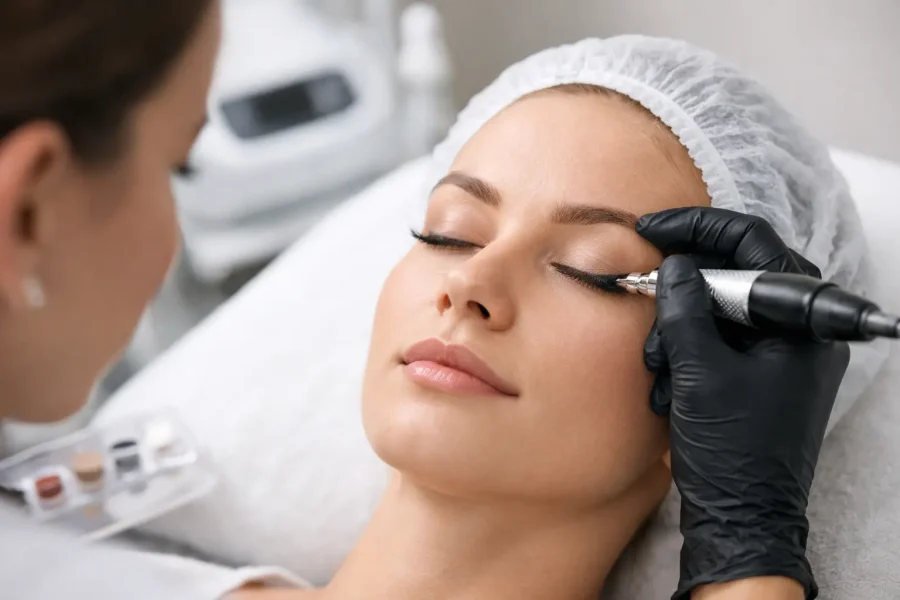
If you have been wondering, is permanent eyeliner painful, the honest answer is usually less than most clients expect. For many women, the sensation is more uncomfortable than truly painful, especially when the treatment is performed with a careful technique, quality numbing, and a tailored approach to your skin and sensitivity.
That said, permanent eyeliner is still a cosmetic tattoo treatment around one of the most delicate areas of the face. It is completely normal to feel nervous about that. The eye area is sensitive, and everyone’s pain tolerance is different, so the best answer is not a dramatic yes or no. It depends on the style of eyeliner, your natural sensitivity, your stress level on the day, and the experience of the artist performing the procedure.
Most clients describe permanent eyeliner as a strange sensation rather than a sharp or intense pain. You may feel vibration, scratching, light pressure, or a tickling sensation near the lash line. Some clients find the sound of the machine more unnerving than the treatment itself.
A lash enhancement, where pigment is placed subtly along the lash line, is often easier to tolerate than a thicker or more defined eyeliner style. The more detailed and layered the design, the more likely you are to feel some increasing sensitivity as the appointment continues.
This is where technique matters. A refined, experienced approach can make a noticeable difference to comfort. Gentle skin handling, thoughtful pacing, and knowing when to pause all contribute to a calmer experience. In specialist hands, the treatment is designed to feel controlled, safe, and manageable.
Most people expect a burning or cutting feeling, but that is not how clients typically describe it. A better comparison is a repetitive scratching or buzzing sensation on the skin, combined with mild tenderness around the eye. Because the eyelid is such a thin area, it can also feel a little odd simply from being worked on so closely.
Watering eyes are very common during treatment, and that does not necessarily mean you are in pain. It is often just the eye’s natural response to the area being touched. Some clients also notice that one eye feels more sensitive than the other, which is very normal.
If you already wear contact lenses, have had cosmetic tattoos before, or are comfortable with beauty treatments, you may find permanent eyeliner easier than expected. If you are highly sensitive, anxious, or new to aesthetic treatments, you may be more aware of each step. Neither reaction is unusual.
Comfort is never one-size-fits-all. Several factors can influence how the procedure feels on the day.
Your natural pain threshold plays a role, but so does your stress level. If you arrive tense, overtired, or worried, your body tends to register sensation more strongly. Hormonal changes can matter too. Many women notice increased sensitivity around their menstrual cycle.
Skin condition is another factor. Thin, delicate, or reactive skin can be more sensitive than stronger skin types. Previous cosmetic work in the area may also change how the skin responds.
The style you choose matters as well. A soft lash enhancement is typically less intense than a thicker eyeliner with more definition. Longer appointments can also create more tenderness simply because the area is being worked on for more time.
Then there is artist skill, which is one of the biggest variables. Precision, pressure control, pigment implantation technique, and how the skin is stretched all affect both comfort and healing. Expertise does not just influence the final look. It directly shapes the treatment experience.
Topical numbing is commonly used and can make a significant difference, but it is best to think of it as reducing discomfort rather than removing all sensation. Most clients still feel movement, vibration, and some tenderness. The goal is not to make the area feel completely absent. It is to keep the procedure comfortable enough that you can relax.
Some parts of the treatment may feel easier than others, especially once the numbing has had time to work. Even with numbing, brief moments of sensitivity can happen, particularly at the inner or outer corners of the eye.
A professional treatment plan will account for this. Comfort is managed throughout the appointment, not just at the start. That is one reason why choosing a specialist is so important for permanent makeup in delicate facial areas.
For most clients, any discomfort is short-lived. During the appointment, the sensation tends to come and go rather than build into severe pain. Afterward, the area usually feels tender, slightly swollen, or a little tight for the first day or two.
This stage is often more noticeable as puffiness than pain. Your eyelids may feel heavy or mildly irritated, much like you have been rubbing your eyes or wearing eye makeup for too long. Some clients experience very little swelling, while others swell more easily. That variation is normal.
Healing is usually manageable when aftercare is followed properly. Picking, rubbing, using the wrong skincare, or returning too quickly to eye makeup can make the area feel more irritated than it needs to.
Sometimes yes, but not always. A touch-up appointment is usually shorter because the shape and base color have already been established. That can make it feel easier overall.
However, some clients say the second session feels a little more sensitive because they know what to expect and are more aware of the sensation. Others find it more comfortable because there is less uncertainty. Again, it depends.
The good news is that touch-ups are usually more about refining retention, balance, and detail than repeating the entire process from the beginning. In many cases, that means less time on the skin.
A smoother experience often starts before the appointment. Good preparation can help your body stay calmer and your skin respond better.
Avoid caffeine right before your session if you know it makes you jittery. Try to arrive well rested, hydrated, and with a light meal. If you wear contact lenses, you will usually need to remove them for the treatment, so glasses are a good idea for afterward.
It also helps to be open with your artist. If you are nervous, sensitive, or prone to watering, say so. A client-centered practitioner will adjust pacing, explain each stage clearly, and create a more supportive experience from start to finish.
Some discomfort is normal. Sharp, escalating, or distressing pain should not be ignored. A professional permanent makeup artist wants your feedback and will guide the session accordingly.
This is one reason a personalized treatment environment matters so much. Permanent eyeliner should never feel rushed. Around the eyes, precision and client comfort go hand in hand.
At Tanya Peters Aesthetics, that balance of safety, precision, and personalized care is central to the treatment experience. The goal is not only beautiful, natural-looking definition, but a process that feels calm, well managed, and tailored to the individual client.
For most women, no. If fear of pain is the main thing holding you back, it helps to know that permanent eyeliner is typically very tolerable when performed by an experienced specialist. It is a sensitive treatment, yes, but it is rarely the dramatic experience people imagine.
A better question than is permanent eyeliner painful might be this: is it manageable enough for the result you want? For many busy women who want polished definition without daily liner, the answer is absolutely yes.
If you value natural, long-lasting results and want to wake up looking more defined with less effort, a consultation with a qualified specialist can give you clarity, confidence, and a much more realistic sense of what the experience will actually feel like.