You can be consistent with your workouts, eat well, and still feel frustrated by areas that look softer, looser, or less defined than you would like. That is often where radio frequency body contouring becomes appealing – not as a replacement for healthy habits, but as a treatment that supports firmer-looking skin and a more refined silhouette in places that do not always respond the way you want.
For many women, the goal is not a dramatic transformation. It is feeling smoother through the waist, tighter around the abdomen, more confident in fitted clothing, or more comfortable with skin texture on the thighs or arms. Non-invasive body treatments can help bridge the gap between effort and appearance, especially when the plan is tailored to your body rather than treated like a one-size-fits-all fix.
Radio frequency body contouring uses controlled heat energy to warm the deeper layers of the skin. That heat stimulates collagen and elastin activity, which can help improve skin firmness, support tissue tightening, and create a smoother, more toned appearance over time.
This matters because body concerns are not always about fat alone. In many cases, the issue is skin laxity, mild crepiness, or a lack of firmness that softens the outline of an area. If the skin itself looks looser, even a lean body shape may not look as defined as you want. Radio frequency focuses on that quality of the skin.
Depending on the treatment plan, it may also be combined with other non-invasive body sculpting services such as cavitation or cellulite-focused treatments. When that happens, the goal is usually more comprehensive contouring – addressing both shape and skin texture rather than treating one concern in isolation.
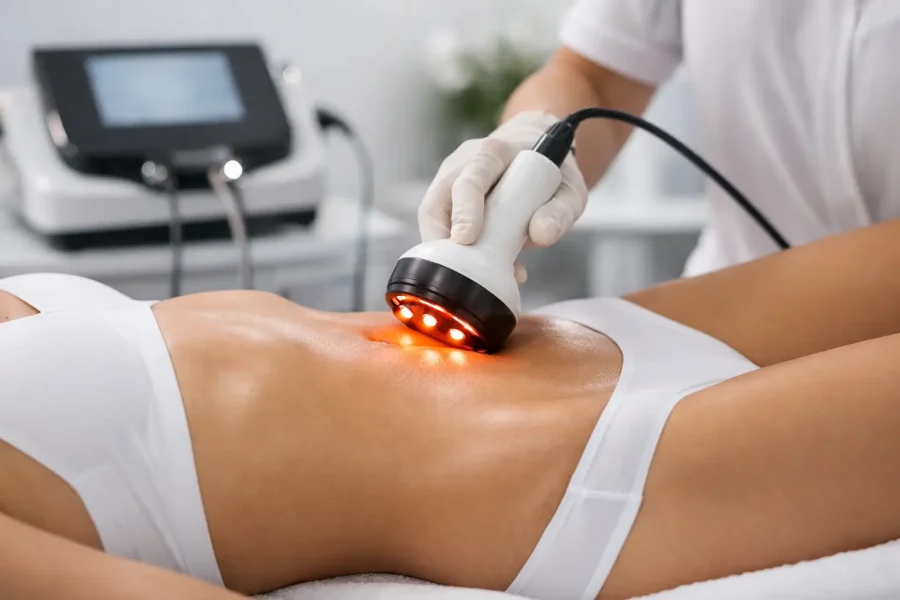
Most clients are surprised by how comfortable the treatment is. The sensation is typically described as a steady, warming massage. The device is moved across the treatment area while the skin temperature is monitored and controlled to keep the experience effective and safe.
There is no surgery, no anesthesia, and no extended downtime. After the appointment, most people go straight back to their normal day. That convenience is one of the main reasons this category of treatment appeals to busy professionals, mothers, and clients who want visible enhancement without putting life on hold.
That said, comfortable does not mean casual. Results depend on correct technique, appropriate settings, and a treatment plan based on the condition of the skin, the area being treated, and the outcome you are hoping to achieve. Precision matters.
Radio frequency body contouring tends to suit clients who are already close to their general body goals but want help with firmness, texture, and definition. It is often a strong option for mild to moderate skin laxity on the abdomen, thighs, buttocks, arms, or flanks.
It can also be useful after weight changes, pregnancy, or simply with age, when collagen production naturally slows and skin no longer snaps back as easily. If your concern is that an area looks less toned than it used to, even when your lifestyle is consistent, radio frequency may be worth considering.
The best candidates usually have realistic expectations. This is not a surgical procedure, and it does not produce the same level of change as liposuction or a tummy tuck. What it can do is gradually improve the look and feel of the skin, enhance contour, and support a more polished overall result.
A consultation is especially important if you are unsure whether the issue is excess volume, skin laxity, cellulite, or a combination of all three. Those concerns can look similar at first glance, but they are treated differently.
This is where honesty matters. Radio frequency body contouring can improve firmness and definition, but subtle, natural-looking change is usually the goal. You may notice the area feeling tighter, the skin looking smoother, and the overall outline appearing more refined after a series of treatments.
Some clients see an early improvement because heat can create a temporary tightening effect. More meaningful changes tend to develop gradually as collagen remodeling continues. That means patience is part of the process.
Results also depend on the starting point. Skin with mild laxity may respond more noticeably than skin with significant looseness. Hydration, age, lifestyle, treatment frequency, and consistency all play a role. If someone promises dramatic overnight reshaping, that should raise questions.
The most satisfying outcomes often come from a treatment plan that is both realistic and personalized. In a specialist setting, that means looking at your body as a whole, not just treating one area in isolation.
Collagen stimulation is cumulative. One treatment can be a helpful start, but a series is usually recommended because the skin responds progressively. Repeated sessions help build on the initial tightening effect and encourage more visible improvement over time.
Spacing matters too. Treatments are generally scheduled in a way that allows the tissue to respond while maintaining momentum. If sessions are too far apart or stopped too early, results may be less impressive than they could have been.
Maintenance can also be part of the plan. Just as skin continues to age naturally, body skin is still influenced by time, hormones, weight fluctuation, and lifestyle. Occasional maintenance sessions help support the improvements you have already achieved.
One of the biggest misconceptions is that all body sculpting treatments do the same thing. They do not. Radio frequency body contouring is primarily about tightening and skin quality. Fat-focused treatments are designed to target volume. Cellulite treatments focus more on texture and unevenness.
That distinction is important because the right treatment depends on what is actually bothering you. If your main concern is a soft lower abdomen after weight loss, tightening may be the priority. If the area feels fuller or bulkier, fat reduction may be more relevant. If dimpling on the thighs is the issue, a cellulite-focused plan may be more useful.
Sometimes the right answer is combination treatment. That is often where the best non-invasive results are achieved – not by overpromising with one machine, but by choosing the right approach for the right concern.
Refined aesthetic work is never just about the device. It is about assessment, technique, and knowing when a treatment is appropriate. A thoughtful provider will look at skin thickness, laxity, treatment area, existing body composition, and your comfort with gradual change.
This is also where client education matters. When you understand what the treatment can and cannot do, you are more likely to feel confident in your decision and satisfied with the process. Good care is not about selling the most sessions possible. It is about matching the treatment to the person.
At Tanya Peters Aesthetics, that specialist mindset is central to the experience. The focus is on safe, non-invasive enhancement with natural-looking results, delivered through precision, personalized care, and treatment planning that respects your individual goals.
If you are exploring radio frequency body contouring, ask yourself a few honest questions. Are you looking for subtle refinement or dramatic change? Is your main concern skin firmness, stubborn fullness, or cellulite texture? Are you willing to commit to a series rather than expecting everything from one appointment?
Those answers shape whether this treatment is the right fit. They also help set realistic expectations from the beginning, which is one of the most important parts of any aesthetic journey.
You should also choose a provider who treats body contouring as a specialist service, not an afterthought on a general menu. Safety, precision, and treatment customization make a visible difference, particularly with heat-based technology.
When done well, radio frequency body contouring can be a smart, confidence-building option for women who want smoother skin, better definition, and natural enhancement that still looks like them – just more polished, firmer, and more comfortable in their own shape.
If you have been feeling close to your goals but not quite there, that last step may not be about doing more on your own. It may simply be about choosing a treatment that meets your body where it is and helps it respond with a little more refinement.