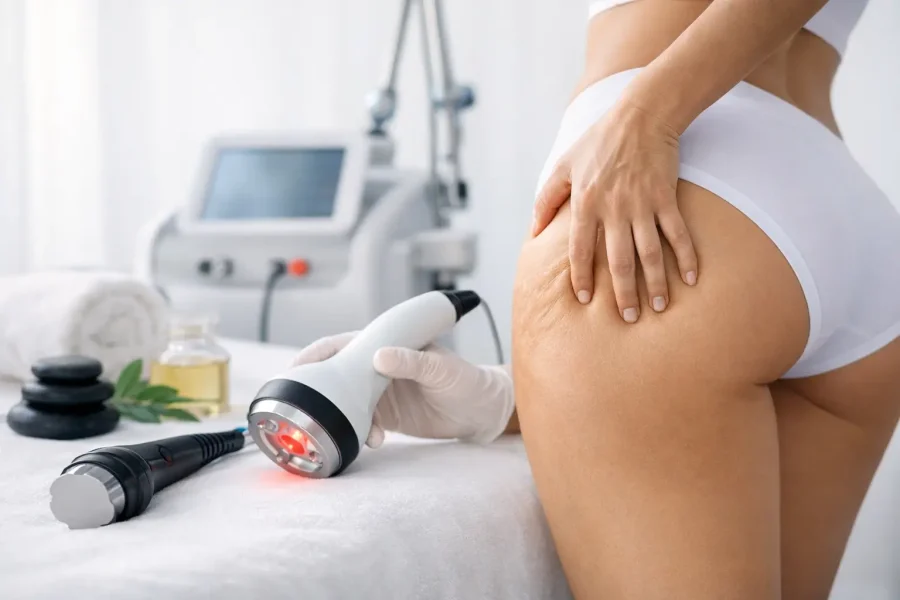
Cellulite rarely shows up because someone is doing something wrong. Many women who eat well, exercise regularly, and take care of themselves still notice dimpling on the thighs, hips, or buttocks. That is exactly why cellulite reduction treatment options are such a common point of interest – not because cellulite is unusual, but because it is incredibly normal and often frustratingly resistant to lifestyle changes alone.
For most clients, the real question is not whether cellulite can be treated at all. It is which treatments are worth your time, what kind of result is realistic, and how to choose an option that improves skin texture without looking overdone or requiring surgery. The best approach is usually a tailored one, based on the severity of the cellulite, the quality of the skin, and whether concerns like laxity or localized fullness are part of the picture too.
Cellulite is caused by the way fat sits beneath the skin and how connective bands pull downward between those fat pockets. When the fibrous bands tighten and the fat pushes upward, the surface can take on a dimpled or uneven appearance. Hormones, genetics, skin thickness, circulation, and natural changes in collagen all play a role.
That is why cellulite can affect women of many body types. It is not simply a weight issue, and it is not a sign that someone is unfit. Even very lean women can have noticeable cellulite, especially in areas where the skin is naturally thinner or where connective structures are more prone to puckering.
When clients start comparing cellulite reduction treatment options, it helps to know that not every treatment is trying to do the same thing. Some methods focus on improving circulation and lymphatic flow. Others aim to tighten the skin, reduce the appearance of mild fat pockets, or soften the visible contrast between dimples and smoother surrounding tissue.
This matters because the right choice depends on what is driving the concern. If the issue is mostly skin looseness, a tightening-focused treatment may make the biggest difference. If the area also has some fullness, body contouring may be more useful. If the cellulite is deeper or more fibrous, surface-level treatments may help, but expectations need to stay realistic.
For women who want improvement without surgery or significant downtime, non-invasive treatments are often the most appealing place to start. These options can be especially well suited to clients who want gradual, natural-looking refinement.
Radio frequency works by delivering controlled heat into the deeper layers of the skin. This heat stimulates collagen activity and can help the skin appear firmer and smoother over time. In cellulite treatment, that firmer skin can reduce the visibility of dimpling, especially when laxity is making the texture look more pronounced.
This option is often best for mild to moderate cellulite paired with some loss of firmness. It is not a one-session fix, and most clients need a course of treatments. Results build gradually, which many women appreciate because the change looks natural rather than sudden.
Fat cavitation is more commonly associated with body contouring than with cellulite alone, but it can still be relevant in the right case. If an area has both mild localized fullness and visible skin texture concerns, reducing some of that fullness may help the surface appear more even.
That said, fat cavitation is not a direct cure for cellulite. It tends to work best as part of a broader plan rather than as a standalone answer for significant dimpling. A professional assessment is important here, because if the concern is mostly connective bands and loose skin, cavitation on its own may not deliver the result a client has in mind.
In practice, combination plans are often the most effective non-invasive route. A treatment that supports contour, paired with one that improves skin firmness, can address more than one contributing factor at the same time. This is where personalized treatment planning becomes especially valuable.
At Tanya Peters Aesthetics, that tailored approach is central to achieving refined, natural-looking results. Rather than forcing every client into the same treatment path, the focus is on selecting the right method based on the skin, the body area, and the outcome the client actually wants.
Creams, dry brushing tools, massage devices, and compression garments all have their place, but they tend to offer modest and temporary improvement rather than a dramatic change. Some can make the skin look smoother for a short period by boosting circulation or slightly reducing fluid retention. Others improve the feel of the skin without changing the underlying structure much.
That does not mean they are pointless. For clients who are already having professional treatments, supportive home care can help maintain the skin and complement in-studio results. The key is understanding their limits. If the goal is a visible change in moderate cellulite, home treatments alone are unlikely to be enough.
This is where honesty matters. Cellulite can often be improved, but it is rarely erased completely. Any provider who suggests otherwise is setting expectations too high.
A good result usually means the skin looks smoother, firmer, and more even in clothing, swimwear, and everyday lighting. Dimples may appear softer and less obvious. The area may also look more toned overall if the treatment plan includes contouring support. For many women, that level of improvement is exactly what they want – not perfection, but noticeable refinement.
Results also vary from person to person. Skin quality, age, genetics, hydration, hormonal changes, and lifestyle habits all influence how the tissue responds. Some clients see a clear difference after a short series, while others need maintenance to keep the improvement going.
The best cellulite treatment is not the trendiest one. It is the one that matches your tissue, your skin quality, and your expectations.
If your skin feels thinner or looser, a tightening-based treatment may be the stronger option. If the area also carries some localized fullness, combining contouring and firming can make more sense. If your cellulite is more advanced or deeply tethered, a non-invasive treatment may still help, but the improvement will likely be more subtle.
This is why a consultation matters. A skilled practitioner should assess the area properly, explain what the treatment can and cannot do, and recommend a plan that feels realistic rather than sales-driven. Safety, precision, and personalized care should always come first.
Before booking, ask how the treatment works, how many sessions are usually needed, and what sort of result is typical for someone with concerns similar to yours. It is also worth asking whether the treatment addresses cellulite directly, or whether it mainly improves related issues like skin laxity or localized fat.
A reputable provider should also talk through maintenance. Most non-invasive treatments are not permanent in the sense of one course lasting forever. Skin continues to age, collagen changes over time, and lifestyle factors still matter. Maintenance sessions are often part of protecting the result.
Professional treatments generally work best when supported by consistent habits. Good hydration, regular movement, strength training, and stable weight can all help the skin and underlying tissue look healthier. None of these will remove cellulite on their own, but they can support better treatment outcomes.
Skin care can help too, especially when it focuses on hydration and overall skin quality. Even simple consistency often makes the skin look fresher and more supple. Small improvements in skin condition can make a visible difference when paired with in-studio treatment.
Non-invasive cellulite treatment is a strong option for women who want visible improvement with minimal interruption to daily life. It suits clients who value gradual, polished results and prefer an approach that feels supportive rather than extreme.
It is especially appealing for busy women who want to feel more confident in fitted clothing, activewear, or swimwear without taking a surgical route. The right plan can improve skin smoothness, firmness, and overall body confidence while still looking completely natural.
Cellulite is common, but feeling stuck with it is not your only option. With the right assessment and a personalized treatment plan, improvement is possible – and often in a way that feels elegant, subtle, and genuinely worth the investment.