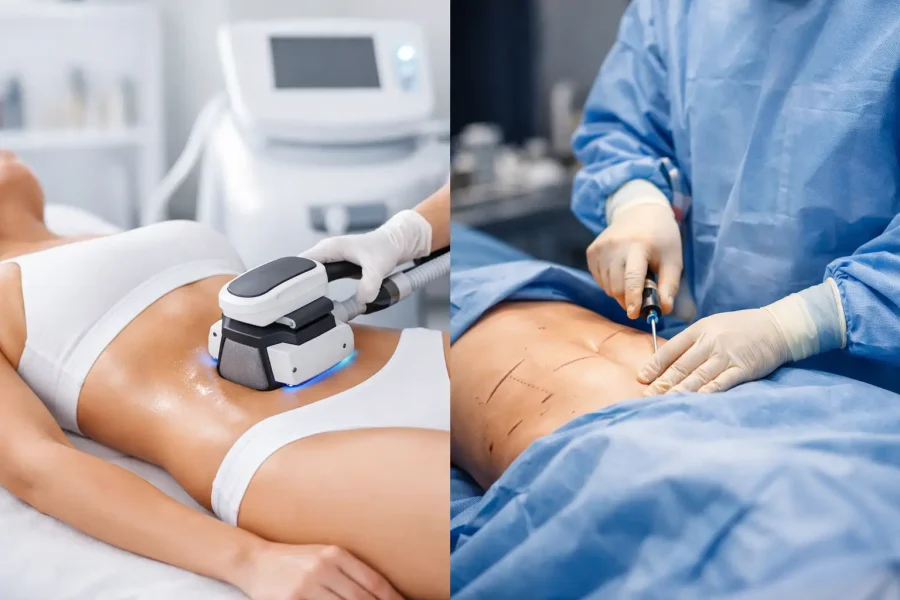
A flat lower abdomen that still will not smooth out. A bra-line area that resists every workout. Loose-looking skin after weight loss or pregnancy. These are usually the moments when the question of body sculpting vs liposuction becomes real – not theoretical. Most clients are not choosing between two random treatments. They are trying to decide which option matches their body, their comfort level, and the kind of result they actually want.
That distinction matters. Body contouring is not one category with one outcome. Surgical fat removal and non-invasive shaping can both improve definition, but they do it in very different ways. If your goal is a refined, natural-looking improvement that fits your lifestyle, it helps to understand where each treatment shines and where expectations need to be more measured.
The simplest way to think about body sculpting vs liposuction is this: liposuction is surgery that physically removes fat, while non-invasive body sculpting encourages gradual change without surgery. Liposuction is designed for more significant fat reduction in targeted areas. Body sculpting treatments such as fat cavitation, radio frequency skin tightening, and cellulite-focused treatments are better suited to clients who want contour improvement, smoother texture, and firmer-looking skin with minimal disruption.
That does not make one better than the other across the board. It means they serve different priorities.
Liposuction is often chosen by people who want a more dramatic reduction in one area and are comfortable with anesthesia, downtime, swelling, and a surgical recovery period. Body sculpting tends to appeal to clients who want a more conservative approach, prefer to avoid surgery, and are looking for a treatment plan that works with a busy schedule.
Liposuction can be very effective when there is a clear pocket of fat that has not responded to diet and exercise. Common treatment areas include the abdomen, flanks, thighs, upper arms, and under the chin. Because fat is physically removed, changes are often more noticeable than what non-invasive treatments can achieve in a single round.
For the right candidate, that can be a real advantage. If someone has enough volume in a specific area and wants a substantial reduction, liposuction may deliver the level of change they are hoping for more efficiently than body sculpting could.
But the trade-off is significant. Liposuction is still surgery. There may be bruising, swelling, soreness, compression garments, activity restrictions, and a recovery period that can interfere with work, parenting, exercise, or social plans. Results also depend heavily on skin quality. If the skin has reduced elasticity, removing fat alone may not create the smooth, tight finish a client expects.
That is one of the most common misunderstandings. Less fat does not always mean firmer-looking skin.
Non-invasive body sculpting is often a better fit for clients who are already relatively close to their ideal shape but want help with stubborn areas, mild skin laxity, or cellulite texture. These treatments are not trying to replicate surgery. They are designed to refine, contour, and improve skin quality in a more gradual and lower-commitment way.
Fat cavitation targets localized fat using ultrasound technology. Radio frequency treatments focus on skin tightening by heating the deeper layers of the skin and supporting collagen remodeling. Cellulite reduction treatments work to improve the appearance of dimpling and uneven texture. In practice, this means body sculpting can address more than just fullness. It can also improve the look of firmness and smoothness, which is often just as important to the final result.
For many women, that combination feels more aligned with what they actually want. They are not necessarily asking for a dramatic transformation. They want their waistline to look cleaner in fitted clothing, their stomach to appear more toned, or their thighs to look smoother and more even. A subtle but polished improvement can be the ideal outcome.
Results are where honesty matters most. If you compare body sculpting vs liposuction purely by how much fat can be reduced, liposuction usually has the edge. It is the more aggressive option, and the change is typically more substantial.
If you compare them by convenience, recovery, and the ability to improve contour while supporting skin firmness, body sculpting has clear advantages.
Non-invasive treatments generally require a series. Results build over time, and they depend on the treatment area, the condition of the tissue, your lifestyle, and your baseline body composition. Liposuction often creates a bigger visible shift sooner, but the final result still takes time to settle because swelling can last for weeks or months.
So the better question is not which one works more. It is which one works better for your goal.
If your priority is maximum fat removal in one area, surgery may be the stronger option. If your priority is natural-looking refinement with minimal downtime, body sculpting may be the more sensible path.
For many clients, the decision is made here.
Liposuction usually involves planning around recovery. Even when the procedure is straightforward, you still need to account for discomfort, visible bruising, swelling, and limitations while healing. That can be manageable, but it is rarely effortless.
Non-invasive body sculpting fits more easily into everyday life. Most clients return to normal activity straight away. That matters if you have work commitments, school pickups, workouts, or simply do not want your treatment to become the center of your schedule.
There is also a comfort factor. Some people are perfectly comfortable with surgery. Others know they would prefer a gentler approach if they can still achieve a result that feels worthwhile. Neither mindset is wrong. It comes down to your threshold for downtime and how aggressively you want to treat the area.
Liposuction is often best for someone with a distinct, pinchable fat deposit, good general health, and realistic expectations about surgery and healing. It is not a weight-loss solution, and it is not the best answer for loose skin on its own.
Non-invasive body sculpting is often best for someone who is close to a stable weight, wants to target smaller stubborn areas, and values gradual improvement. It can be especially appealing when skin texture, mild laxity, or cellulite are part of the concern. At Tanya Peters Aesthetics, that non-surgical approach is designed around natural, tailored enhancement rather than an overdone or harsh-looking result.
The quality of your skin, your body composition, and your goals all matter. A person with excellent skin elasticity and a moderate fat pocket may respond very differently from someone dealing with thinner skin, post-pregnancy changes, or cellulite through the thighs. That is why personalized assessment matters more than broad promises.
At first glance, body sculpting may appear less expensive because individual sessions cost less than surgery. Liposuction has a higher upfront price, especially once surgeon fees, facility costs, anesthesia, garments, and recovery-related expenses are factored in.
At the same time, non-invasive treatments often involve multiple sessions, so the overall investment can add up depending on the plan recommended. This is another area where expectations should be realistic. If someone needs a dramatic change, choosing a lower-cost treatment that cannot meet that goal may feel more expensive in the long run.
Value is not just about price. It is about whether the treatment suits the result you want.
Aesthetic decisions are personal. Some clients want the strongest intervention available because they are ready for a visible reset. Others want a softer, more measured improvement that feels in step with the rest of their beauty and wellness routine.
There is also peace of mind in choosing a treatment that aligns with your comfort level. If surgery feels too intense, that matters. If gradual improvement would frustrate you and you know you want a bigger change, that matters too. The right choice should feel informed, not pressured.
The best treatment is the one that matches both your anatomy and your expectations. If you want a significant fat reduction and accept the realities of surgery, liposuction may be appropriate. If you want contouring, smoothing, and skin-focused improvement without downtime, body sculpting may be the better fit.
What matters most is not choosing the most dramatic option. It is choosing the one that can deliver a result you will feel good living with – in your clothes, in your schedule, and in your own skin. A thoughtful treatment plan should leave you feeling more like yourself, just more refined.