If you are comparing fat cavitation vs coolsculpting, you are probably not looking for hype. You want to know what each treatment actually does, how it feels, what kind of result is realistic, and which option makes the most sense for your body and your goals.
That comparison matters, because these treatments are often grouped together as if they do the same job. They do not. Both are non-surgical body contouring treatments designed to target stubborn areas that do not respond easily to diet and exercise, but they work in very different ways and suit different clients.
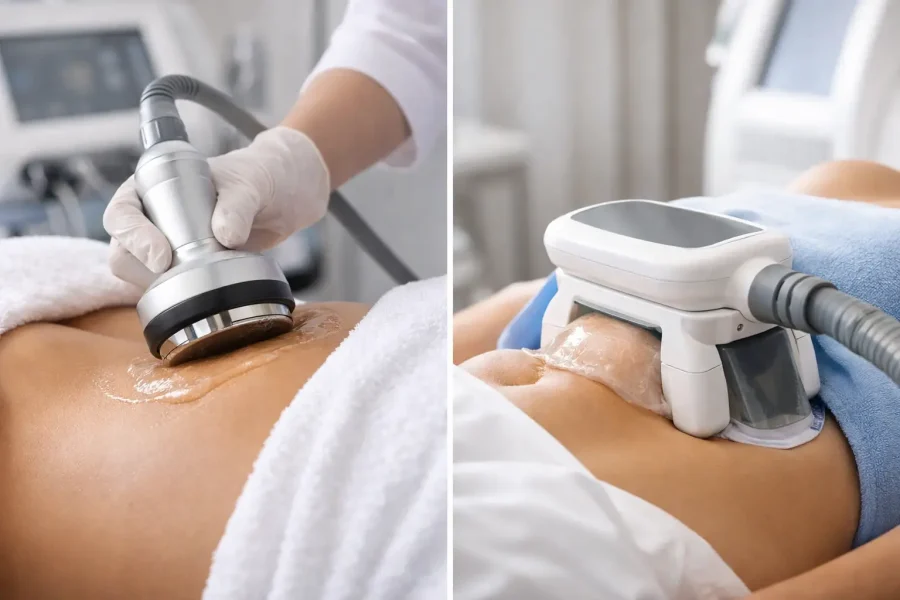
The simplest way to understand fat cavitation vs coolsculpting is this: fat cavitation uses ultrasound energy to disrupt fat cells, while CoolSculpting uses controlled cooling to freeze fat cells.
Fat cavitation is typically a gentler, more gradual treatment plan. It is often chosen by clients who want a series-based approach with no significant downtime and who may also be interested in combining contouring with skin-focused treatments like radio frequency.
CoolSculpting is more commonly positioned as a single-area fat reduction treatment with longer-lasting changes developing over time. It can be effective for pinchable pockets of fat, but it is also known for a more intense treatment experience and a higher cost per area.
Neither option is a weight loss treatment. Both are best for body shaping, not dramatic scale changes. If your goal is refinement rather than a major transformation, you are looking in the right category.
Fat cavitation uses low-frequency ultrasound to target localized fat beneath the skin. The energy creates pressure changes that disrupt the fat cell membrane, and the body then processes that released fat through its natural metabolic pathways.
In practice, the treatment feels straightforward and manageable for most clients. Sessions are usually comfortable, with a warming sensation or a mild buzzing sound in the ears caused by the ultrasound frequency. There is no freezing, suction, or sharp discomfort, which is one reason many clients prefer it.
Results tend to build gradually over a course of appointments. That makes fat cavitation a strong fit for clients who value a customized plan and are happy to improve an area step by step. It can work particularly well on the abdomen, flanks, thighs, arms, and other soft, stubborn areas where contour matters more than volume alone.
CoolSculpting uses a process called cryolipolysis. During treatment, an applicator pulls the tissue into place with suction and cools the fat cells to a temperature designed to trigger their breakdown. The body then clears those damaged fat cells over the following weeks and months.
This treatment is often marketed as convenient because some areas may require fewer sessions than cavitation. But that does not always mean simpler. The suction can feel strong, and the cooling phase can be uncomfortable at first. After treatment, it is common to have temporary numbness, tenderness, bruising, or sensitivity in the area.
CoolSculpting can be a reasonable option for clients with clearly defined bulges of fat who are comfortable with a more clinical treatment experience. It is less appealing for clients who want a gentler appointment and a more flexible, layered body sculpting plan.
For most people, fat cavitation is the easier treatment to tolerate.
That matters more than many clinics admit. When a treatment feels manageable, clients are more likely to stay consistent with their plan, return for follow-up sessions, and combine it with supportive habits that help maintain the result.
Fat cavitation is generally described as comfortable, with little to no downtime. Some clients may have mild redness or warmth in the treated area, but they can usually go straight back to normal activities.
CoolSculpting tends to involve a more noticeable recovery period, even if it is still considered non-surgical. You may leave with numbness, swelling, tingling, or bruising, and that can last days or even weeks for some clients. For busy professionals and mothers trying to fit treatments around work, school runs, and daily life, that difference can be significant.
This is where nuance matters. The better treatment depends on what kind of result you want and how quickly you expect to see it.
Fat cavitation usually delivers gradual inch-loss and visible contour improvement across a treatment series. It is ideal for clients who want to smooth and refine an area rather than rely on one larger intervention. Because sessions are repeated, the treatment plan can be adjusted as your body responds.
CoolSculpting can reduce fat in a treated area, but results are still not instant. Most clients need to wait several weeks to see early changes and longer for the full outcome. While the treatment is often promoted as a one-and-done option, that is not always realistic. Some clients need more than one session per area to reach their preferred result.
There is also the question of skin quality. Reducing fat is only one part of body contouring. If the skin in the area is lax, thin, or prone to textural concerns, a fat reduction treatment alone may not create the polished look you want.
That is one reason fat cavitation can be particularly appealing when paired with radio frequency skin tightening. The combination supports contour and firmness together, creating a result that can look more balanced and refined.
Fat cavitation often suits clients who are already close to their goal weight but feel frustrated by soft pockets of fat that remain resistant. It is especially attractive if you want a non-invasive option with no needles, no surgery, and no major interruption to your schedule.
It is also a strong choice if you prefer a personalized treatment plan. Rather than treating the body as a fixed template, cavitation can be part of a broader sculpting approach tailored to your shape, skin condition, and priorities.
Clients who value natural-looking progress often appreciate this route. The change happens progressively, which can feel more discreet and more in line with an overall beauty maintenance routine.
CoolSculpting may suit clients who have a very specific bulge they want reduced and who are comfortable with a more intense treatment process. Some people prefer the appeal of treating an area and then waiting for the body to process the result over time.
That said, it is not automatically the better option just because it is widely recognized. Brand familiarity is not the same as treatment suitability. A well-planned cavitation program may be the better match for your body, your comfort level, and your expectations.
Cost is often where the conversation becomes more practical.
CoolSculpting is usually more expensive per treatment area. For some clients, that higher upfront cost feels worthwhile if fewer sessions are needed. For others, the price makes less sense when they learn that multiple areas, repeat treatments, or additional body contouring services may still be needed.
Fat cavitation is often more accessible and can offer better flexibility. Because it is usually delivered as a course of treatments, the plan can be built around your goals and budget more gradually. That approach also gives your practitioner more opportunity to assess progress and refine the strategy as needed.
Value should not be measured by price alone. It should be measured by how appropriate the treatment is for your body and how likely it is to deliver a result you will actually feel confident in.
The best decision starts with honest expectations. If you want a non-surgical treatment that feels comfortable, fits easily into your routine, and can be combined with skin tightening for a smoother overall finish, fat cavitation is often the more appealing path.
If you are focused on one distinct area of pinchable fat and do not mind a stronger treatment experience or a higher price point, CoolSculpting may be worth considering.
The most important step is not choosing the trendiest treatment. It is choosing a provider who understands body contouring properly and can assess whether the issue is fat volume, skin laxity, texture, or a combination of all three. That is where expertise makes the difference between a generic treatment and a result that looks elegant, balanced, and natural.
At Tanya Peters Aesthetics, body sculpting is approached with that level of care – tailored planning, professional guidance, and a focus on refined results that complement your shape rather than overpromise dramatic change.
A good body contouring treatment should leave you feeling more like yourself, just smoother, more defined, and more confident in the areas that have been bothering you.